
3 Min Read

A whole home remodel can transform the way you live, but a few early design missteps can make for a bad experience and a bad outcome.
Knowing the most common whole home remodel mistakes to avoid helps to keep the process smooth and your remodeling goals intact.
In this article, we highlight common whole home remodel mistakes to avoid and explain how addressing these whole house renovation design problems early leads to smoother projects and stronger long-term results.
Here are the top mistakes to avoid when remodeling your whole home:
Mistake #1: Starting Design Without a Clear Scope and Budget
Mistake #2: Overlooking How the Home Will Be Lived In Day to Day
Mistake #3: Making Structural Changes Without Builder Input
Mistake #4: Underestimating the Impact of Material Selections
Mistake #5: Choosing a Builder After the Design Is Complete
Mistake #1: Starting Design Without a Clear Scope and Budget
One of the most common whole-home remodel planning errors occurs when you don't clearly define the scope and budget. When priorities aren’t established early, designs can grow in ways that feel exciting but become difficult to execute.
Why Unclear Priorities Create Bigger Problems Later
When scope and budget are still undefined, confident decision-making becomes difficult. As real costs come into focus, plans often need to be revisited, which can lead to:
- Repeated design revisions
- Extended timelines during planning and pre-construction
- Misalignment between design intent and construction reality
Aligning Design Goals With Realistic Investment Ranges
A successful whole home remodel balances vision with feasibility. Early budget alignment allows your team to focus design energy where it matters most, including:
- Prioritizing spaces that will have the greatest impact
- Understanding how finish selections influence overall cost
- Identifying structural changes that require careful planning
- Preserving flexibility for informed adjustments as the design evolves
How Early Clarity Supports Better Collaboration
Clear expectations from the start allow your designer and builder to work in step. With a defined scope and budget, the process benefits from:
- More accurate scheduling and coordination
- Fewer surprises once construction begins
Establishing clarity early creates a stronger foundation for a whole home remodel that feels organized, intentional, and far easier to manage from design through completion.

Mistake #2: Overlooking How the Home Will Be Lived In Day to Day
Some whole house renovation design problems don’t become obvious until after the project is complete. Spaces may look beautiful, but if they don’t support daily routines, the home can feel less comfortable than expected.
Design decisions should account for how people move through the home, how spaces are used at different times of day, and how sound and privacy are managed.
Everyday Function Matters More Than the Reveal
A whole home remodel works best when it reflects real life, not just idealized floor plans. Practical considerations often make the difference, including:
- Adequate storage for daily use, not just display
- Thoughtful traffic flow between shared spaces
- Acoustic planning for work, rest, and gathering areas
- Privacy between bedrooms, work areas, and common spaces
- Lighting that supports both task needs and overall comfort
- Flexible spaces that can adapt as needs change over time
Mistake #3: Making Structural Changes Without Builder Input
One of the most costly design mistakes in whole home remodeling is moving forward with structural changes before a builder has reviewed what’s involved, since ideas that look simple on paper often carry hidden complexity.
Early Builder Insight Prevents Expensive Revisions
When a builder is involved early, structural ideas can be evaluated with real-world construction knowledge.
This helps homeowners avoid:
- Redesigns after plans are already underway
- Unexpected costs tied to structural or system changes
- Delays caused by mid-project adjustments
- Permit complications when plans require engineering changes
- Disruptions to the construction schedule once work is in progress
Collaboration between your designer and builder from the beginning leads to smarter planning, fewer surprises, and a remodel that stays aligned with both your vision and what the home can support.
Mistake #4: Underestimating the Impact of Material Selections
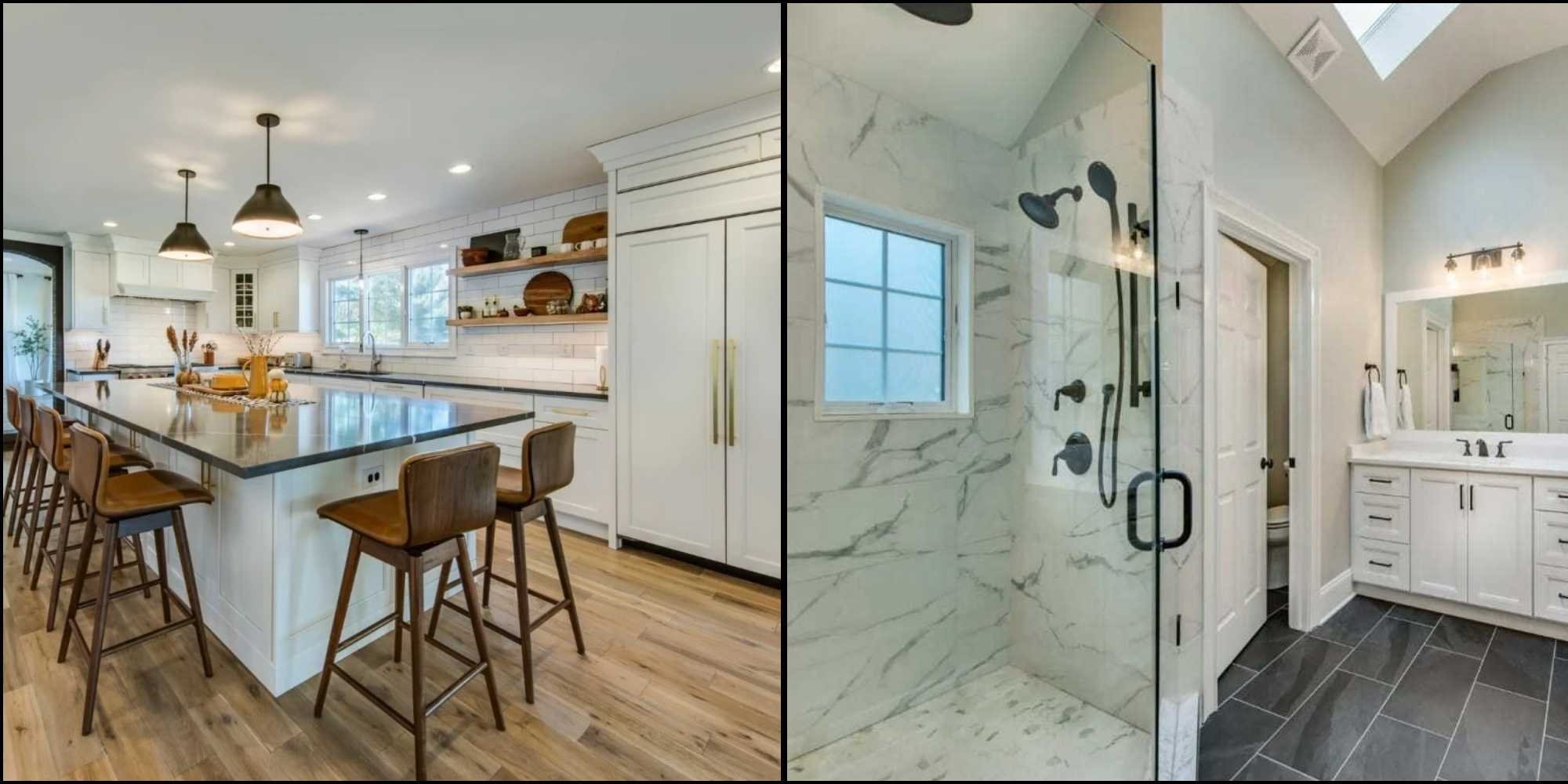
Material choices influence far more than how your home looks, and underestimating how finishes affect budget, schedule, installation complexity, and availability is one of the most common whole home remodel mistakes to avoid.
Choosing Materials With the Full Project in Mind
Thoughtful material planning helps prevent surprises during construction and long after the project is complete. Key considerations include:
- Lead times that may affect the overall schedule
- Products that become discontinued mid-project
- Maintenance requirements that impact long-term use
- Durability in high-traffic or high-moisture areas
Balancing aesthetics with performance and availability allows your design to hold up over time while keeping the project moving forward.
Early coordination with your builder and design team helps ensure material selections support both the vision for your home and the realities of construction.
Mistake #5: Choosing a Builder After the Design Is Complete
One of the biggest mistakes homeowners make during a whole house remodel is waiting to involve a builder until the design is finished. While plans may look complete on paper, construction realities often require adjustments that could have been addressed much earlier.
Late builder involvement can limit flexibility, reduce opportunities for value engineering, and lead to costly revisions once the project is underway.
Bringing your builder into the process early enables constructability review, clearer budgeting, and smoother coordination, helping the entire team deliver a better outcome with fewer surprises.

Planning Well Makes All the Difference
A successful whole home remodel is rarely about avoiding risk entirely. It’s about making informed decisions at the right time.
With thoughtful planning and early collaboration, many of the biggest mistakes homeowners make during a whole house remodel can be avoided. The right team helps turn complexity into clarity from start to finish. When you're ready to find out how Thompson Communities offers a clear process and unwavering support through a major remodel, reach out to us and schedule a consultation.